
Wabash County Arrest Records
A Wabash County arrest record can refer to the law-enforcement side of an incident: the arresting agency, booking process, custody status, and any local hold. The official Wabash County sheriff source did not publish a public online jail roster in the research reviewed. That means booking or current custody questions should start with the Wabash County Sheriff's Department, while filed court charges should be searched through Indiana MyCase or requested from the clerk when copies are needed.
Once a case moves into court, the charge record becomes part of the public court file when the case is not restricted. The filed charges may show offense date, statute, severity level, citation number, bond entries, hearing dates, disposition, and sentence. For the full criminal case file, including pleas and sentencing, use the criminal court record. For local custody and jail contact information, use the inmate search page.
The Wabash charge path can involve several offices. The sheriff may answer current custody or warrant-status questions, the prosecutor decides what criminal charges to file for the State, and the clerk keeps the filed court record once the case exists. MyCase can show public charge entries and CCS events, but certified copies and older or non-downloadable filings still route through the Wabash County Clerk's records process.
Find Wabash Charges After Arrest
The first online court route is Indiana MyCase. Search by defendant name, case number, citation number, or cross-reference number. Use Wabash County, Wabash Circuit Court, Wabash Superior Court, or Wabash City Court filters when results are broad. MyCase can show charges, case status, chronological case summary entries, bonds, hearings, and public documents when available.
- Search MyCase by name, case number, or citation number.
- Open the Wabash case and review the charge list, statute, level, and filed date.
- Read the chronological case summary for amended charges, bond events, hearings, and disposition.
- Call the sheriff if the question is current custody or booking status rather than filed charges.
- Request certified copies from the Wabash County Clerk when an official charge document is needed.
The Indiana DOC offender locator is a state-prison custody tool, not a Wabash County arrest database.
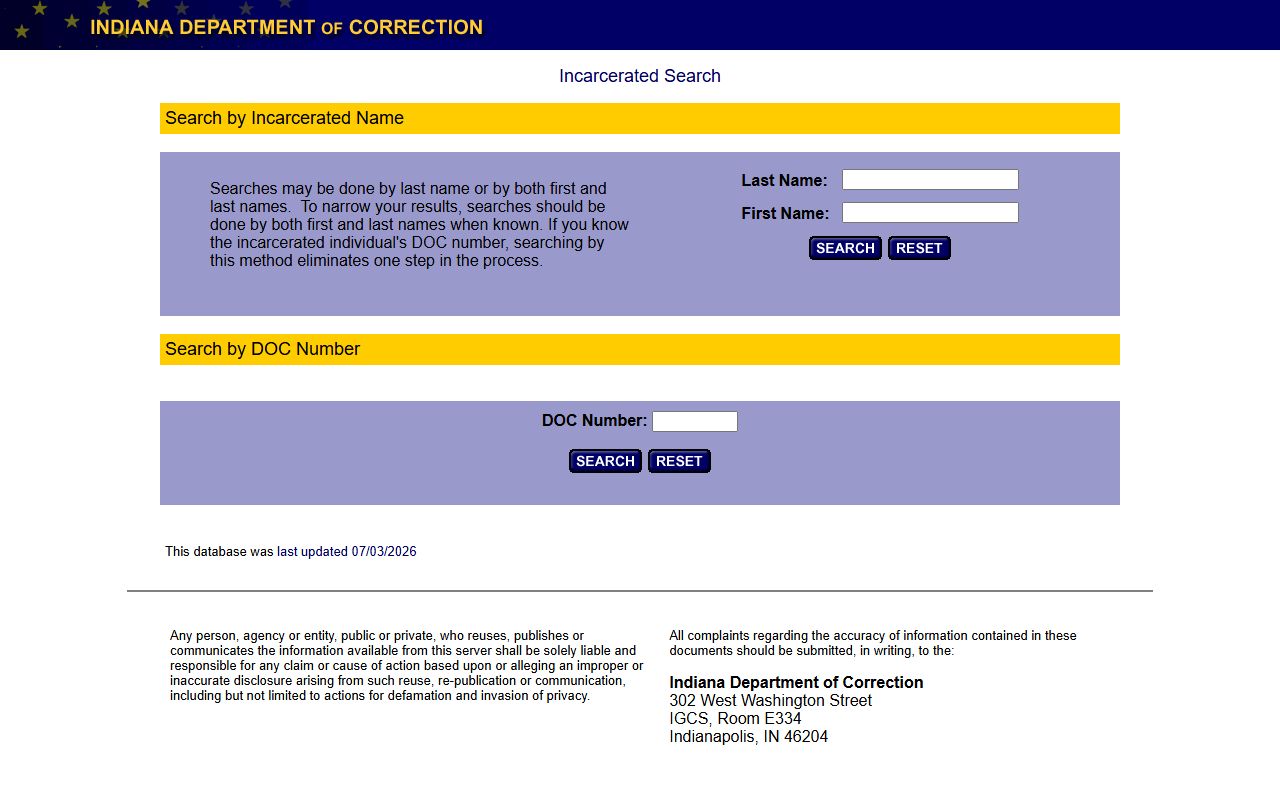
Use IDOC after sentencing or transfer to state custody; use MyCase and local offices for Wabash court charges after arrest.
Charging Documents in Wabash
Indiana counties use a prosecuting attorney, not a district attorney. The Wabash County Prosecutor's Office represents the State of Indiana in felony and misdemeanor prosecutions from Wabash County. The prosecutor decides what formal charges to file after law enforcement submits reports and probable-cause material.
The three charging-document labels below explain common terms. A single arrest can lead to one charge, several charges, amended charges, or no filed criminal case if the prosecutor declines to file.
Local allocation rules then determine where the court charge record belongs. Murder and higher felony levels are filed in Wabash Circuit Court. Misdemeanors and infractions are filed in Wabash Superior Court. Level 6 felonies generally alternate, except motor-vehicle or watercraft felony cases, which go to Superior Court. That court assignment affects which case number appears in MyCase and which court handles hearings.
| Document | Who Uses It | What It Does |
|---|---|---|
| Complaint | State or plaintiff depending on case type | Starts a criminal or civil matter by stating the claim or allegation. |
| Information | Prosecutor | Formally charges a criminal offense without a grand-jury indictment. |
| Indictment | Grand jury | Charges an offense through grand-jury action when that route is used. |
Charging records become court records after filing, but prosecutor administrative records and investigative files may have different access limits. Court charges after arrest should therefore be verified in the case file rather than inferred from booking language alone.
Wabash Charge Status Terms
Charge status can change as a Wabash County criminal case moves through court. A charge can be pending, amended, reduced, dismissed, resolved by plea, resolved by trial, or limited by expungement after a later petition. The status of each count matters because a case can contain multiple counts with different outcomes.
| Status | What It Means |
|---|---|
| Pending | The charge has been filed and has not reached final disposition. |
| Amended | The prosecutor or court record changed the charge, wording, statute, or level. |
| Reduced | The charge was lowered to a lesser level or offense as part of case resolution. |
| Dismissed | The charge was terminated by court action and did not become a conviction. |
| Conviction | The defendant was found guilty or entered a guilty plea on that charge. |
| Expunged or sealed | Public access is restricted by statute, court rule, or court order. |
Charges vs Convictions
A charge is an allegation filed by the State. It is not proof by itself. A conviction is a guilty finding or guilty plea. Wabash County court records can show charges that later end in dismissal, amendment, acquittal, plea to a different count, or conviction. This distinction is one reason court-charge records should be read count by count instead of treated as a simple criminal-history summary.
| Question | Charge | Conviction |
|---|---|---|
| What it shows | An accusation filed in court | A final guilty result on a count |
| Where it appears | Charging document, CCS, MyCase charge list | Disposition, judgment, sentence, and CCS entries |
| Can it change? | Yes, it may be amended, reduced, or dismissed | It can later be appealed, corrected, or expunged only through legal process |
| How to verify | Read the charge and status | Read disposition and sentence entries |
Custody and Notifications
Arrest records often lead people to custody tools. Indiana SAVIN and VINELink are notification and custody-status channels, not certified court-charge records. They are useful when the concern is release, transfer, or custody status after an arrest. The sheriff links page also points to VINE and offender registry resources.
The Indiana SAVIN page supports statewide victim notification information.
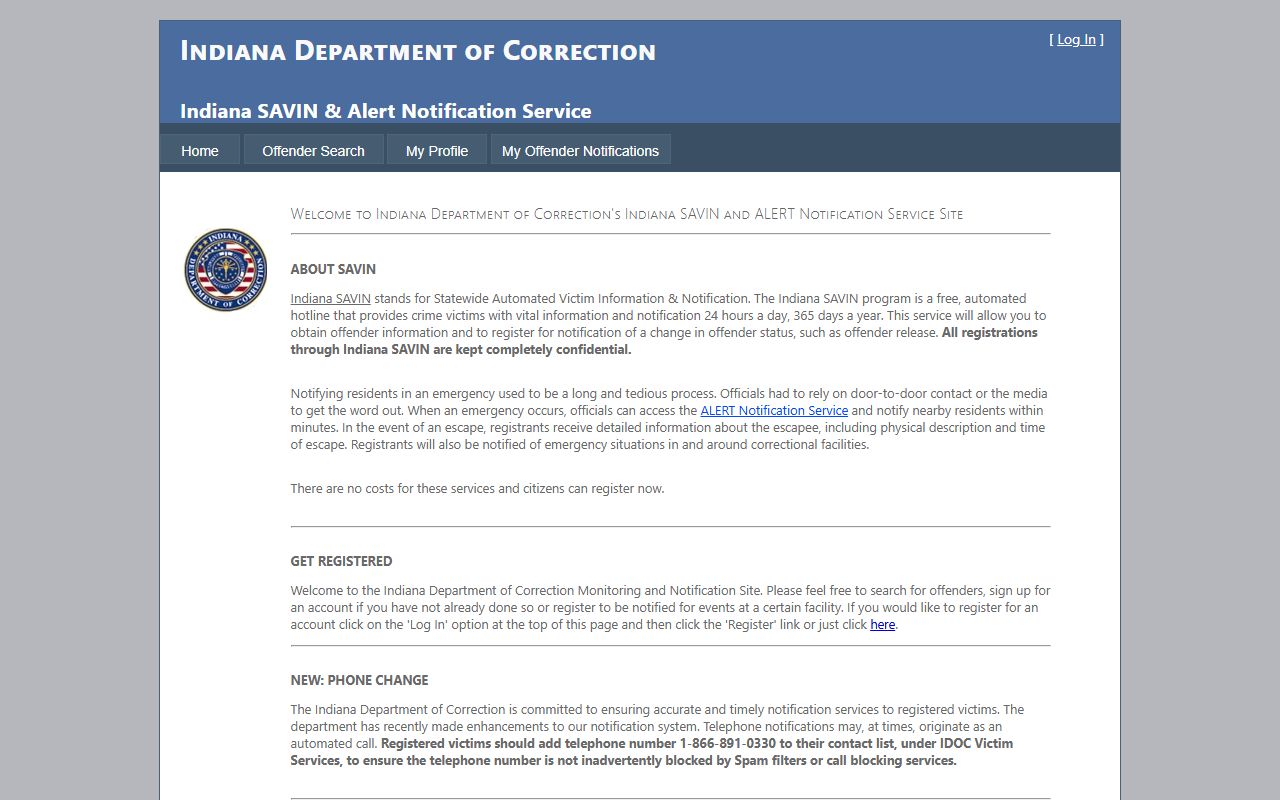
SAVIN can help track custody notifications while MyCase and clerk records show the court case and charges.
The Indiana VINELink portal is another official custody status and notification route.
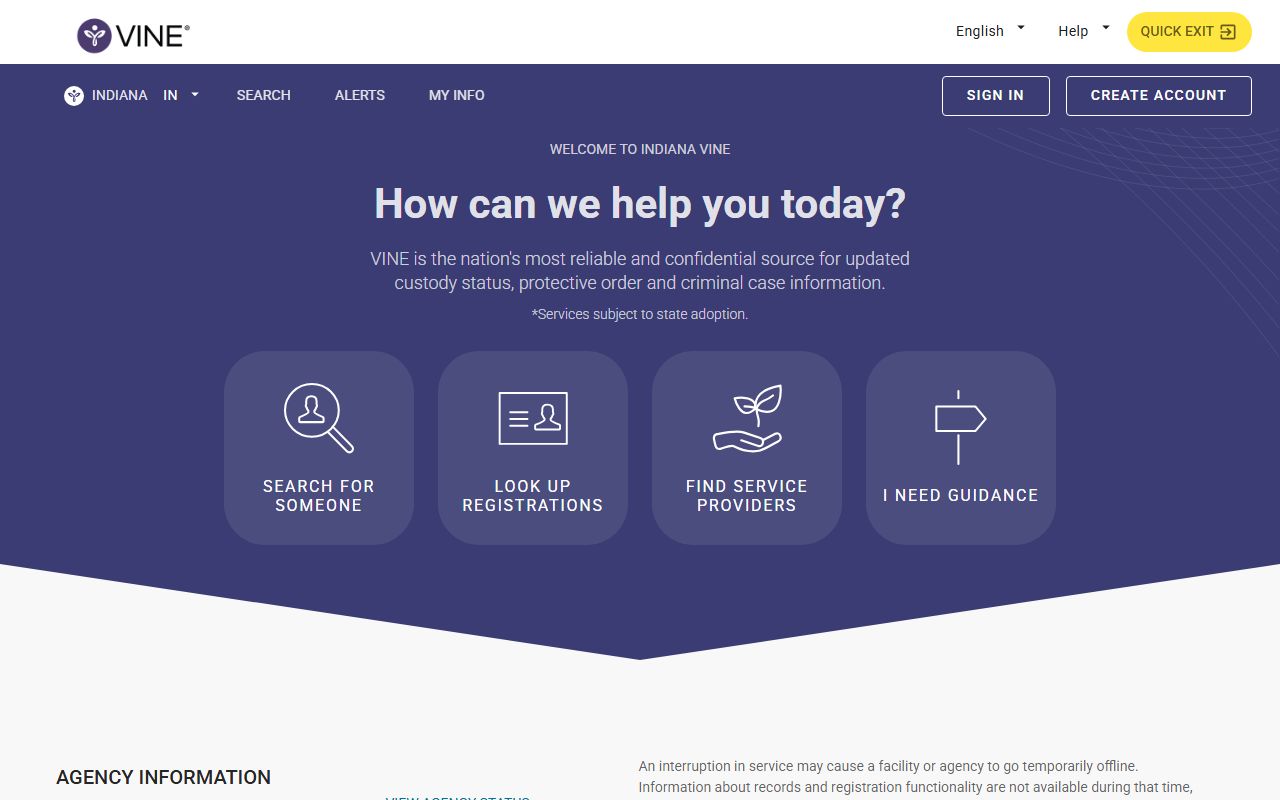
VINELink is helpful for custody awareness, but it does not replace the court's filed charge record or the clerk's certified copies.
Restricted Wabash Charge Records
Not every arrest or charge detail is public. Indiana court access rules restrict sealed and confidential records, juvenile records, certain victim and witness details, mental health and medical material, and sensitive personal information. Juvenile records have separate rules under IC 31-39. Expungement under IC 35-38-9 can limit public access when the statutory process is granted.
When a Wabash County charge record is public but the document is missing online, use the clerk request process rather than a background-check shortcut. Written research requests should identify names, years to search, record type, and contact information. If the question is why a charge was filed, amended, or dismissed, the court file may show public events, but prosecutor work product and investigative details may still fall outside ordinary public copying.
| Point | Sealed | Expunged |
|---|---|---|
| Public access | Hidden or limited by rule, statute, or court order. | Limited after court approval under Indiana expungement law. |
| Common trigger | Juvenile, confidential, sensitive, or court-restricted material. | Eligible arrest, charge, or conviction after statutory waiting periods. |
| Record effect | The record may still exist but is not open to ordinary public view. | The public view changes, but the record is not assumed to vanish from every system. |
The IDOC offender locator landing page explains the state-prison locator route.
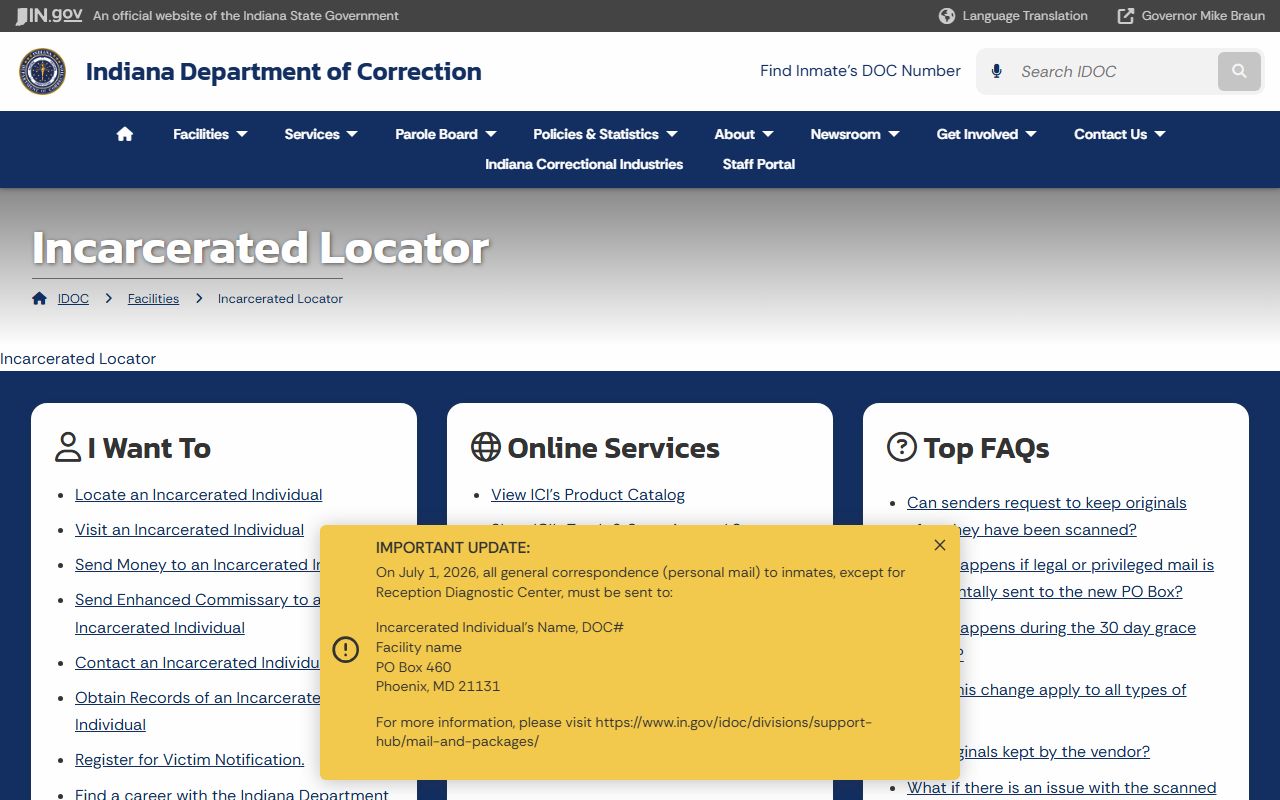
IDOC records are custody records for state offenders and should not be confused with Wabash County court-charge filings.
Registry Records After Charges
Some convictions can lead to registry obligations, but the registry is not the same as an arrest record or court charge record. Indiana maintains sex and violent offender registry resources, and the Wabash County Sheriff's Office is part of the county registry access path. Registry records should be read as a separate public-safety system tied to statutory registration duties.
The Indiana Sex and Violent Offender Registry hub is the state source for registry access.
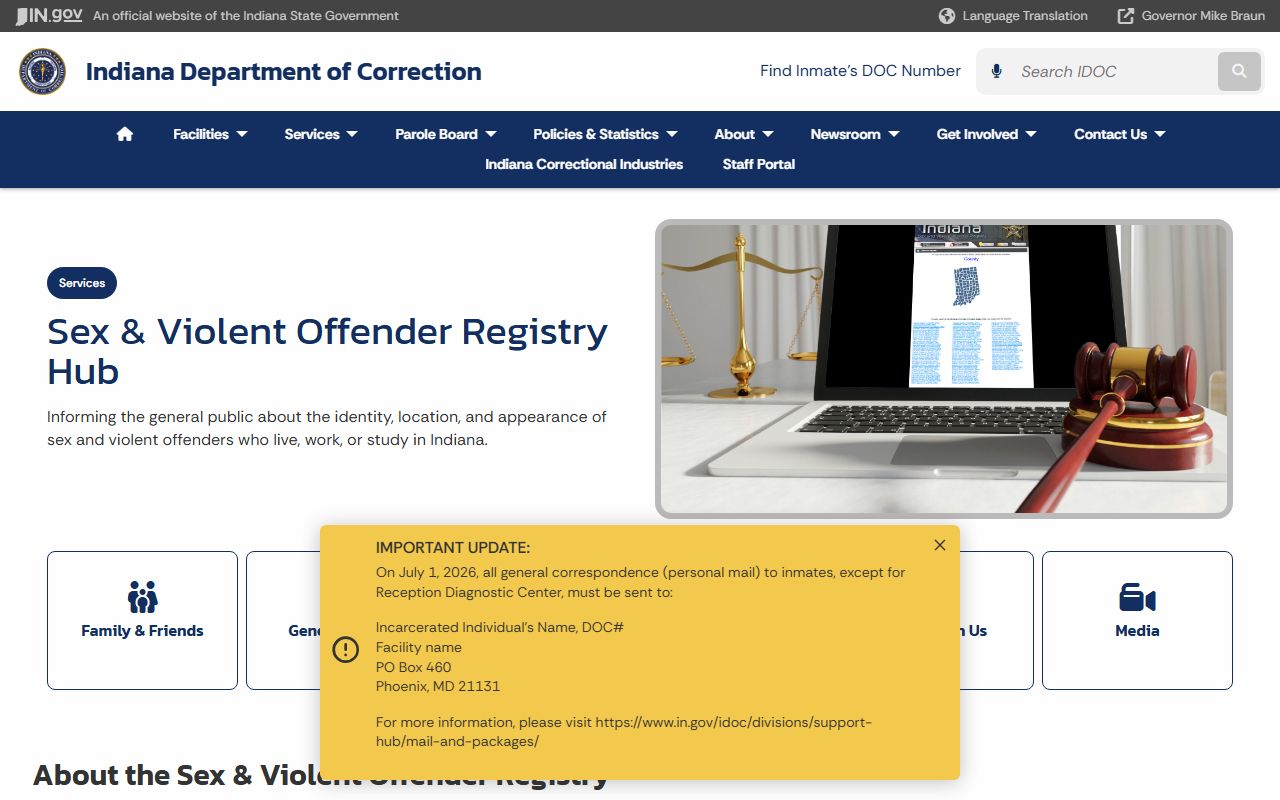
Use registry sources for registration status, and use court records for charges, dispositions, and sentences.
Important: Do not use informal arrest or charge searches for employment, housing, credit, insurance, or other FCRA-regulated decisions.